
Our Retrofit Journey: Understanding Where We Lose Heat
What happens when a 150-year-old community building needs to become more energy efficient?
Before deciding what to change, the first step is understanding how the building performs today
.As part of our retrofit assessment, we have been looking at where heat is being lost from Ruthrieston Community Centre and where improvements could make the biggest difference.
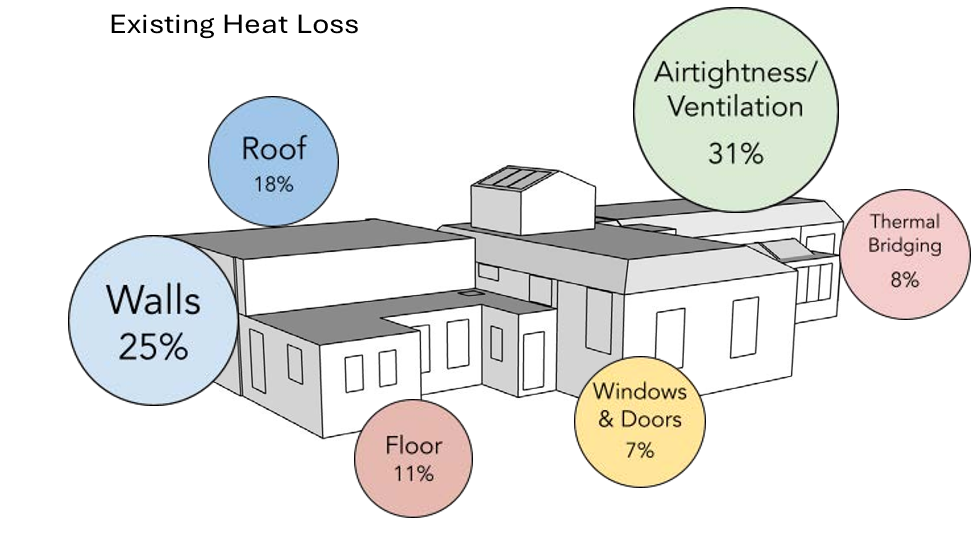
The assessment shows that the largest source of heat loss is through air leakage, linked to the building's airtightness, accounting for around 31%. This is followed by heat loss through the walls at 25% and the roof at 18%. Other areas include the floor, thermal bridging, windows and doors.
But what does this actually mean?
In simple terms, some of the warmth we pay to produce doesn't stay where we need it. Draughts and gaps can allow warm air to escape and cold air to enter, while heat can also be lost through parts of the building fabric.
So why don't we just fix everything at once?
Retrofitting an older building isn't as simple as improving whichever part has the biggest percentage.
Different parts of the building work together. For example, improving insulation and airtightness can also mean that ventilation needs to be considered carefully. Some improvements can also be much more expensive or complicated than others, particularly when working with an older building.
That's why we're taking a phased approach, understanding the building first, then prioritising improvements that can make a meaningful difference while being realistic for our community and the funding available.
This assessment gives us a starting point.
From here, we'll be looking at the individual improvements being considered and explaining what they mean, why they matter and how they could benefit the people who use our centre.
In our next update, we'll look at something we use every day but may not think much about our doors and how improving them could help make the centre warmer and more energy efficient.
This is only the beginning of our retrofit journey.
We're not just improving an old building. We're helping prepare a much-loved community space for its next chapter.